
Select your currency
- AEDUAE Dirham - د.إ
- CADCanadian Dollar - $
- GBPPound Sterling - £
- INRIndian Rupee - ₹
- MXNMexican Peso - $
- THBBaht - ฿
- USDUS Dollar - $
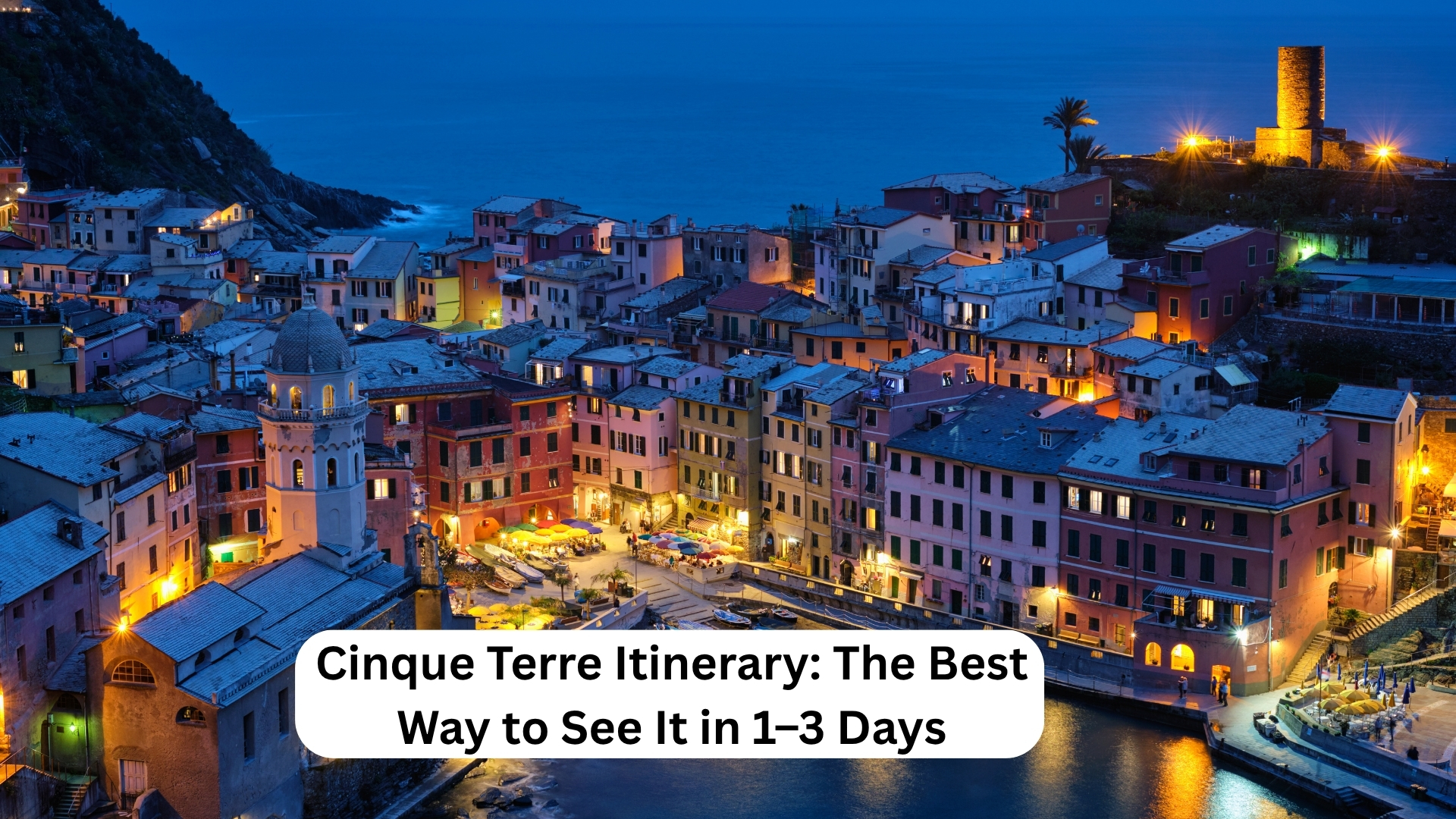
Cinque Terre has five villages that sit so close together, linked by one beautiful train line, that it's tempting to treat the whole place like a checklist: arrive, snap a photo, catch the next train, and repeat.
Yet rushing through it means missing what makes Cinque Terre truly special. Its beauty lies in the slower moments: a cliffside trail with the sea glittering below, a long lunch nobody's rushing you through, a harbour that belongs to no one but you once the day's crowds have gone home. Skip those, and all you'll really have is a handful of photos from a place you never gave the chance to sink in.
The question, then, is how much time that actually takes. Below are three ways to do it: one day, two days and three days, each built around trains, one proper coastal hike, and a single well-chosen boat ride, so no single mode of transport ever swallows your whole day.
One day works as an introduction, not a complete visit. Pick at most four villages, and choose either the hike or the boat, not both.
Two days cover all five villages at a comfortable pace, with room for one coastal hike. You'll have to save Portovenere for a return trip.
Three days is the sweet spot that covers all five villages, a proper hike, beach time in Monterosso, and a half-day trip to Portovenere, without every hour feeling scheduled.
Day 1 - Monterosso, Vernazza, Riomaggiore, Manarola
Day 2 - All five villages, one hike, beach time
Day 3 - All five villages, hiking, beaches, Portovenere, a food experience
Vernazza is the strongest base for this itinerary. It sits centrally between Monterosso and Corniglia, has direct rail links to every other village, and lets you finish a hiking day by walking straight back to where you're sleeping. Rooms inside the five villages are limited and pricey, so if budget or a wider choice of restaurants matters more to you than atmosphere, La Spezia is a practical (and cheaper) alternative just a short train ride away.
Arrive in Vernazza by late morning if you can, drop your bags (most properties will hold luggage before check-in, so confirm ahead), then take the short train to Monterosso.
Monterosso is the largest of the five towns and has the region's best beach, Fegina, worth more than the rushed 20 minutes most itineraries give it. Walk the seafront, take in the Statua del Gigante, then pass through the pedestrian tunnel into the old town for lunch. Keep it light: focaccia, local anchovies or trofie al pesto. You've got a hike after.
The Monterosso–Vernazza leg of the Sentiero Verde Azzurro (the "Blue Trail") is around 3.5km, but don't be fooled by the distance. Long staircases and repeated climbs make it feel longer. Budget two hours, wear proper shoes, carry water, and check trail conditions before you set out, since sections close for weather or maintenance without much notice. The payoff is arriving in Vernazza on foot, with the harbour opening up below you.
Prefer a guide? A full-day private trek lets someone else handle trail conditions and route planning. Want something shorter? A guided vineyard walk above Vernazza swaps the Blue Trail for terraced hills, three wines and snacks.
Spend the evening in Vernazza itself. Piazza Marconi, after the day-trip crowds thin out, is a different village entirely.
Take an early train to Corniglia, the only one of the five villages set above the sea rather than on the waterfront. Climb the Lardarina staircase (or take the shuttle if yesterday's hike is still in your legs), then wander Via Fieschi to the Santa Maria terrace for coastal views.
Head to Riomaggiore for lunch around the harbour, then walk the Via dell'Amore to Manarola, a flat, paved 900m coastal path that takes about 30 minutes.
Note: This route requires a timed reservation and typically runs one-way from Riomaggiore toward Manarola in high season, so check current rules before booking anything else.
In Manarola, a one-hour hands-on pesto-making session is the easiest food experience to slot into this day. Otherwise, spend the time working toward the village's famous viewpoint and staying for sunset. Arrive well before golden hour in summer, as the best spots fill fast.
Train to La Spezia, then walk to the harbour for a boat tour through the Gulf of Poets to Portovenere, roughly four hours round trip with about two hours ashore. It's not one of the five Cinque Terre villages, but it shares the same dramatic coastline and pairs naturally with a Cinque Terre trip. Use the time ashore for the waterfront, the old lanes, and the Church of San Pietro viewpoint.
If schedules allow, round off the day back in Vernazza with a relaxed pesto-and-wine tasting near the station, a fitting way to end an itinerary that started there.
Keep Day 1 exactly as above. On Day 2, combine Corniglia, Riomaggiore, and Manarola into one day by starting early and skipping the optional food experiences if time is tight. Portovenere isn't realistic on a two-day trip; if it's a priority, swap it in for Corniglia rather than trying to add a sixth stop.
Skip Corniglia entirely. Start in Monterosso for the beach and old town, hike to Vernazza, then continue by train to Riomaggiore and walk the Via dell'Amore to Manarola for sunset. This covers roughly 5–6km of walking, including the hike: realistic for active travellers arriving early, but very much a taster rather than the full experience.
Trains are the backbone of any Cinque Terre trip: frequent, fast, and the only sensible way to move between villages, since the roads are narrow, parking is scarce, and there's no useful bus route connecting all five towns.
A regional rail pass covering the local train network and trail access can be worth it on days with several train journeys and a paid trail (like Day 2 above), less so on lighter days. Compare against individual tickets before buying.
Boats offer the one view trains can't: the villages stacked against the cliffs from the water. Corniglia has no ferry port, though, so a boat-only itinerary will always miss one village. Treat it as a single highlight, not your main transport.
Late spring (April–May) brings green hills and good hiking weather, though rain can close trails. September is arguably the best time to visit: the sea is still warm enough to swim in, the worst of the summer heat has passed, trails are far less crowded, and the evening light is softer for photos. October carries that same calm a little further, with a slightly higher chance of rain. June–August is your best shot at beach weather, but it’s also the busiest and most expensive time, so start early and book ahead if you're travelling then. Winter is quiet and atmospheric but comes with reduced ferry services and a higher chance of wet weather disrupting trails.
Q1. Is Cinque Terre worth it?
Yes, but the coastline rewards a slower pace than most itineraries allow for. One trail, one boat trip, one unhurried evening in a village after the day-trippers leave will tell you more about the place than rushing all five towns in a day ever will.
Q2. Do I need a car?
No, it's more hassle than freedom here. Park outside the villages if you're driving in as part of a longer trip in Italy, and use the train for everything else.
Q3. Best beach?
Fegina in Monterosso, by a wide margin. The other villages offer small harbour swimming spots rather than an actual beach.
Q4. Is Portovenere part of Cinque Terre?
No, it's a separate town south of the five villages, but it fits naturally into a three-day trip built around La Spezia.
Planning a longer Italy trip? Cinque Terre works best as a dedicated two-to-three-day stop rather than a rushed stopover between two long travel days. Give it time, and it gives plenty back
Explore articles and posts related to your interests to help you plan your next adventure.